
We may earn a commission when you book through our affiliate links.
Where you stay in Los Angeles decides how much of the trip happens in a car. The city is a spread of centres joined by freeways and a growing rail network, so the choice is less about one best area and more about which daily drive you want removed: Santa Monica for the beach, West Hollywood for the middle of everything with nightlife, Hollywood for the classic sights on a budget, or Downtown for the museums and the rail hub. The exact address matters as much as the district name, because a short map distance in Los Angeles can still mean a rideshare.
Santa Monica: the beach at the doorstep
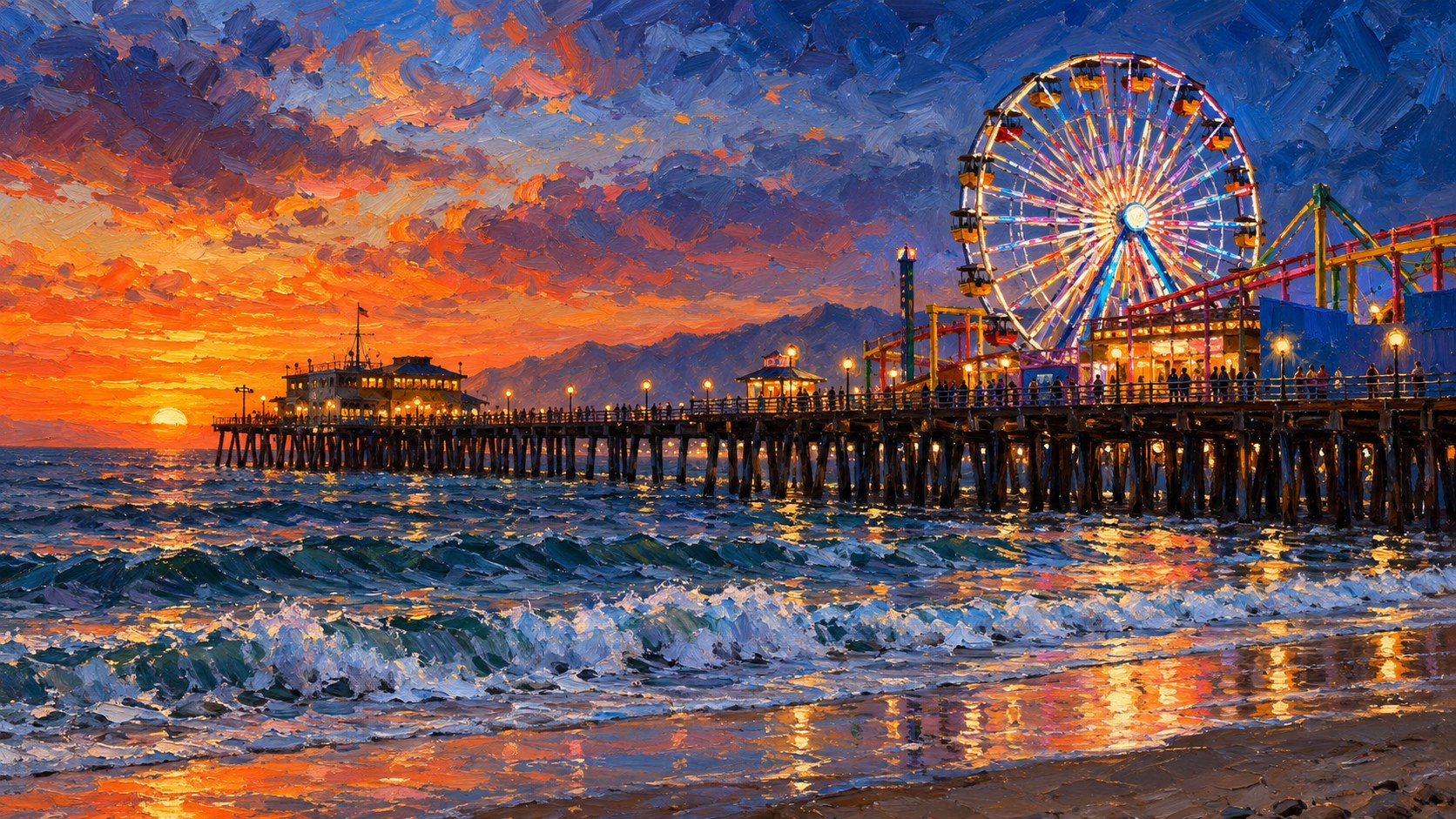
Santa Monica is the walkable beach city: the pier, the ocean path and a compact downtown, with hotels from historic luxury to modern eco-certified designs, as the official tourism site presents it. It is also the western terminus of the Metro E Line, which runs directly to Downtown, so a car-light trip is genuinely possible here. The trade is price and fog: oceanfront rates are among the highest in the county, the marine layer can sit through the morning, and the airport is a drive away on busy corridors. Read room-specific reviews about resort fees, which are common at the beachfront properties.
Best for: couples and beach-first trips, travellers who want a car-light stay with the E Line to Downtown, and spa-hotel budgets; weakest for drivers watching costs, since hotel parking is expensive, and for self-catering, because apartment-style stock is limited near the sand.
West Hollywood: the middle of everything, awake late
West Hollywood is the compact, walkable middle: the Sunset Strip’s legendary music and nightlife scene, where vintage rock history meets modern luxury hotels, as the city’s official site puts it. It sits between the beach and Downtown, which makes it the practical base for a trip that mixes both, and it has the densest dining and evening streets of the four. The trade is transport: West Hollywood has no Metro rail station of its own, so buses and rideshares do the connecting, and Strip-side addresses can be loud into the early hours. Ask about parking rates before assuming a car is cheap to keep here.
Best for: couples and nightlife-first trips, first visits that want a central base without Downtown’s quiet evenings, and design-hotel and rooftop-pool seekers; weakest for light sleepers near the Strip, for budget parking, and for rail-based airport plans.
Hollywood: the classic sights, honest prices
Hollywood is the tourist core: the Walk of Fame, the Chinese Theatre and the sign in the hills, with the Metro B Line running under it to Universal City and Downtown. It offers some of the cheapest full-service beds of the four and the simplest rail access to the classic sights. The trade is polish: the boulevard is scruffier than the postcards, the evening is a different kind of busy, and the nicer stays cluster near Hollywood and Highland rather than further east. Check recent reviews for the specific block rather than the postcode.
Best for: budget-conscious first visits built around the classic sights, Universal Studios trips using the B Line, and travellers who want a Metro station at the door; weakest for spa-hotel stays, for couples seeking a refined evening street, and for beach-first itineraries.
Downtown LA: the rail hub and the museums
Downtown is the city’s transit heart and its cultural quarter: the Arts District, the museums on Grand Avenue and Grand Central Market, with Union Station linking the rail lines and the airport FlyAway bus. It suits travellers who want the museums and the food halls at walking distance and easy rail days without a car. The trade is texture: blocks vary street by street, some areas empty out after business hours, and the honest advice is to pick a well-reviewed address near the hubs rather than the cheapest bed on the map.
Best for: museum and food-hall itineraries, car-free trips using Union Station and the FlyAway, and business-adjacent stays; weakest for beach-first trips, for travellers unsettled by big-city edges, and for anyone expecting a resort feel.
What to check before paying
Compare the full nightly total, not the headline rate: Los Angeles adds a double-digit occupancy tax at checkout, the City of Los Angeles finance office publishes the transient occupancy tax rules, and many hotels add daily resort or facility fees and parking charges on top. Two similar rates can land very differently at checkout, so read the final price line and the fee list before paying. Check the cancellation terms and the real drive time from the address to your main day, because Los Angeles distances that look small on a map stretch at rush hour.
From LAX, rideshares and taxis pick up at the LAX-it lot, reached by shuttle from the terminals, per the airport’s official page; the FlyAway bus runs to Union Station and Van Nuys, and the Metro E Line connects Downtown to Santa Monica if your base sits on that corridor. If you would rather skip the shuttle-and-queue with luggage, a pre-booked Los Angeles private one-way transfer from or to LAX runs door to door with free cancellation up to 24 hours before. Once you have picked an area, compare places to stay on Trip.com; the link opens the general English homepage, so enter Los Angeles and your dates, then compare the full price, the fees and the cancellation terms.
Do not make the hotel do everything
The right base removes your main daily drive and matches the evening you enjoy; it will not make Los Angeles compact. Even from the best-chosen address you will still budget time for the road. Choose the anchor of your trip honestly, and spend the saved difference on one experience you will remember rather than a view that photographs well.
Sources and planning links
- Santa Monica official tourism site
- Visit West Hollywood official site
- Discover Los Angeles: the beginner’s guide to Hollywood
- Discover Los Angeles: the guide to Downtown Los Angeles
- City of Los Angeles Office of Finance: transient occupancy tax
- LAX official: LAX-it rideshare and taxi pickup
- LA Metro: Downtown Santa Monica E Line station
Official sources checked on 25 October 2026. Taxes, transport service and booking terms can change. This guide is planning advice, not a booking or a promise of access.