
We may earn a commission when you book through our affiliate links.
Where you stay in Tokyo decides which train you ride every day. The city is a cluster of centres joined by rail, so the choice is less about a single best area and more about which daily journey you want removed: Shinjuku for the hub and the nightlife, Shibuya for the modern city at the doorstep, Ginza for calm centrality, or Asakusa for old Tokyo at gentler prices. The exact station exit matters as much as the district name, because two hotels both labelled Shinjuku can sit twenty minutes apart on foot.
Shinjuku: the hub that never closes
The official Tokyo guide describes Shinjuku as a buzzing urban playground open around the clock, with the world’s busiest station at its centre, skyscrapers to the west and the neon lanes of Kabukicho to the east. Staying here puts the largest rail interchange under your feet, including direct airport trains, and the evening needs no planning. The trade is scale and noise: the station is a maze, the east side stays loud late, and the cheapest rooms are small even by Tokyo standards. Read room-specific reviews about size, and check which side of the station the address sits on before assuming a quick walk.
Best for: first visits that want one rail hub for day trips and nightlife at walking distance; weakest for couples seeking quiet, for drivers, since parking is scarce and costly, and for travellers who want a kitchen, because most stock here is compact hotel rooms rather than apartment-style stays.
Shibuya: the modern city at the doorstep
Shibuya is the scrambling centre of modern Japanese culture, as the official guide puts it: the famous crossing, fashion, cafes and bars. It suits travellers who want the current city outside the window rather than a commute to it. Hotels cluster near the station, which also has a direct airport train, but the slopes around the station mean some addresses involve a climb with luggage, and weekend crowds are part of the package. Confirm the walking route from the station exit, not just the map distance.
Best for: couples and younger travellers who want the evening at the doorstep and easy airport access; weakest for light sleepers on lower floors, for self-drive visitors, and for spa seekers, since dedicated spa hotels are rarer here than in the tower districts.
Ginza: calm, central, polished
The official guide describes Ginza as Tokyo’s elegant downtown, where tradition and innovation merge: flagship stores by day, exquisite backstreet dining by night, and a noticeably quieter late evening than Shinjuku or Shibuya. It is the most central base of the four for walking to Tokyo Station and the Imperial Palace side, and the likeliest place to find full-service hotels with proper spa facilities. The trade is price and a certain formality; budget rooms are few, and the area winds down earlier than the western hubs.
Best for: travellers who value calm and service, spa-hotel stays, and airport-shuttle users, since hotel limousine buses and taxis are straightforward here; weakest for self-catering and for late-night energy outside the door.
Asakusa: old Tokyo, gentler prices
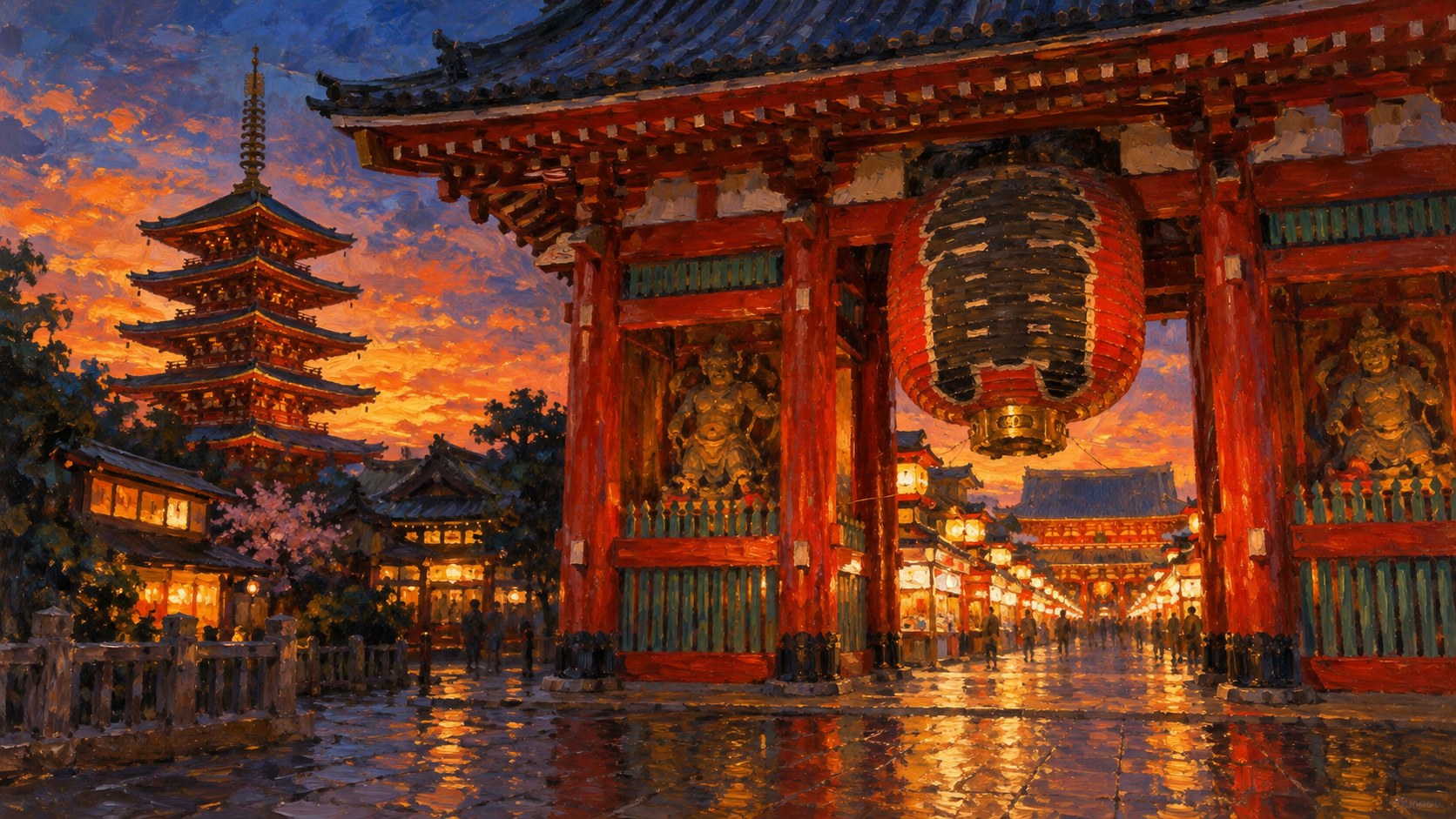
Asakusa is the traditional choice: Senso-ji temple, the Kaminarimon gate and the Nakamise shopping street, riverside views and a slower evening rhythm, as the official guide presents it. It is also the value play, with more small inns and apartment-style stays with kitchens than the western hubs, and direct rail to both airports on the Keikyu and Skyliner side. The trade is distance from Shinjuku and Shibuya, which are a cross-town ride away, and a nightlife that ends early. For a longer stay it can be the most liveable base of the four.
Best for: longer stays and budget-conscious travellers who want a kitchen, early risers who like the temple quiet before the crowds, and Haneda arrivals using the direct Keikyu line; weakest for nightlife-first trips and for travellers whose plans centre on the western hubs.
What to check before paying
Compare the full nightly total, not the headline rate: Tokyo adds a small per-night accommodation tax collected at the property, with revised rules announced to take effect from April 2027, so read the final price line before paying. Check the cancellation terms, whether breakfast is worth its price, and the real walking time from the named station exit, because a five-minute map distance in Tokyo can hide a maze of underground passages.
From Narita, the JR East Narita Express runs directly to Tokyo Station, Shinjuku and Shibuya; from Haneda, the monorail and Keikyu line reach the city in under half an hour, and trains stop running around midnight, so check the last departure against a late arrival. If you would rather skip the rail connection with luggage, a pre-booked Tokyo airport private transfer runs door to door from either airport with free cancellation up to 24 hours before. Once you have picked an area, compare places to stay on Trip.com; the link opens the general English homepage, so enter Tokyo and your dates, then compare the full price and cancellation terms.
Do not make the hotel do everything
The right base removes your main daily ride and matches the evening you enjoy; it will not make Tokyo small. Even from the best-chosen address you will still ride the trains most days. Choose the station you will use most, and spend the saved difference on one experience you will remember rather than a view floor that photographs well.
Sources and planning links
- GO TOKYO official guide: Shinjuku
- GO TOKYO official guide: Shibuya
- GO TOKYO official guide: Ginza
- GO TOKYO official guide: Asakusa
- Tokyo Metropolitan Government: accommodation tax (Japanese)
- JR East: Narita Express
Official sources checked on 25 October 2026. Taxes, transport service and booking terms can change. This guide is planning advice, not a booking or a promise of access.